How to Connect and Control Meross Devices with Apple HomeKit

Meross works with Apple Home in different ways, depending on the device you have. Some Meross devices support HomeKit or Matter directly, while other models may need a bridge to connect with Apple Home.
AddToHomeKit [Recommended Solution]
Now if you are wondering why I say that AddtoHomeKit is the most recommended solution to solve all Meross HomeKit issues.
Just to give you an explanation, it provides you with thousands of plugins you can use to connect your Meross devices to Apple HomeKit. It provides comprehensive step-by-step guides and allows you to connect your Meross devices to Apple HomeKit.
Why Choose the AddToHomeKit Solution?
Pros
- It has thousands of plugins that you can use.
- Easy installation.
- User-friendly interface.
- Amazing compatibility.
Cons
- You must make a small payment.
- Requir some coding knowledge
How to Add a Meross Device to Apple HomeKit Directly
If your Meross device is the HomeKit-compatible version, you can add it directly to Apple Home without using a bridge. Check the device or packaging for the HomeKit setup code, then follow the steps below.
- Power on your Meross device
- Connect to a 2.4 GHz Wi-Fi network
- Open the Apple Home app
- Scan the HomeKit code
- Complete the setup
Keep your Meross device close to your router.
Connect your iPhone or iPad to a 2.4 GHz Wi-Fi network and turn on Bluetooth.
Tap the + button, then select Add Accessory.
Scan the HomeKit QR code on the device or in the manual. If needed, enter the 8-digit setup code manually.
Follow the on-screen instructions, assign the device to a room, and give it a name.
Once the device is added, you can control it through Apple Home and Siri. You can also use the Meross app for firmware updates and additional device settings. For remote access and automations, an Apple home hub such as a HomePod or Apple TV may be required.
ATH Bridge [Budget-friendly Solution]
ATH Bridge is a device solution. As the name already suggests ATH Bridge helps you to avoid incompatibility issues. ATH Bridge is a device that is specifically compiled and is a pre-flashed HomeBridge server. You can use ATH Bridge to connect Meross to iPhone and the Home App allowing you to control Meross away from Home.
Why Chose ATHm Bridge?
Pros
- Very small allowing it to fit with any home decor.
- Affordable
- Allows you to connect your incompatible devices to HomeKit
- Easy operations
Cons
- Depending on where you buy it from, it may take time to arrive at home.
HomeBridge [Software Solution]
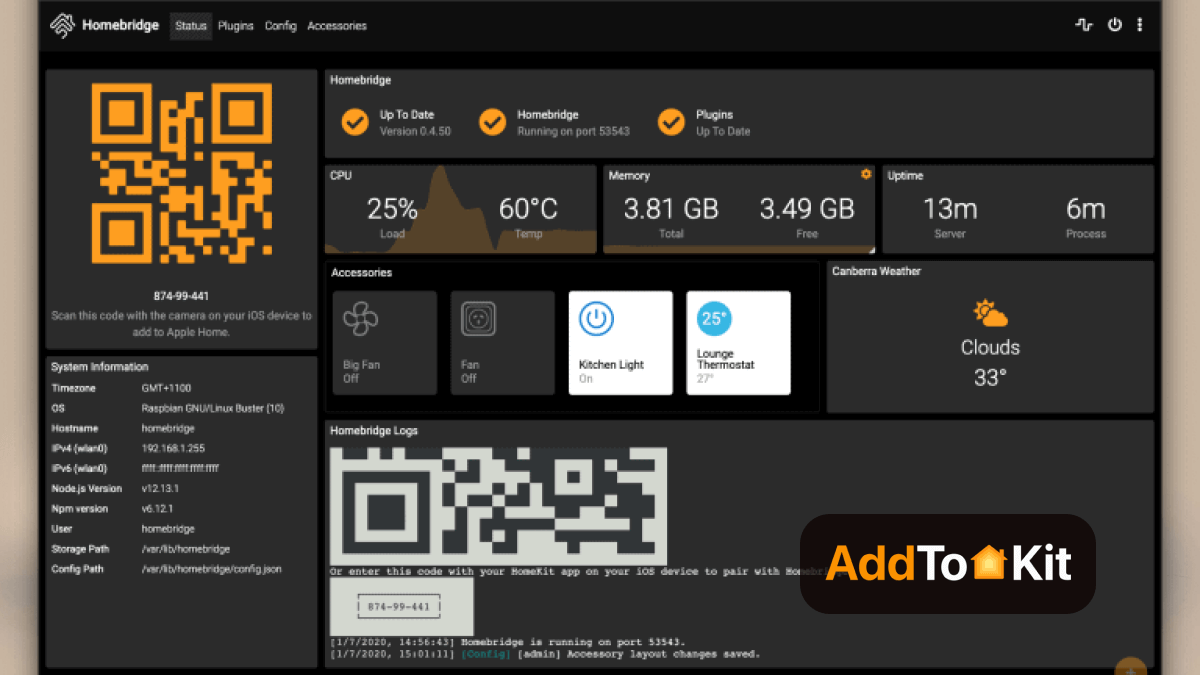
HomeBridge is a lightweight node JS server. It is free to install to any device and most people including myself opt for a Raspberry Pi to do so. It opens Apple HomeKit to non-compatible devices which allows you to connect your Meross devices to HomeKit.
Why Chose HomeBridge?
Pros
- Offers a great solution.
- Allows you to connect any device to HomeKit.
Cons
- It requires a bit of coding knowledge.
- You need an all-day running device like a Raspberry Pi.
HOOBS
HOOBS (HomeBridge Out of the Box) is an update of HomeBridge. It is a plug and play system. It is very easy to use this solution. They also offer thousands of plugins for each device brand.
Why Chose HOOBS?
Pros
- Offer many plugins
- Easy to use
- Does not require coding knowledge
- User-friendly
Cons
- Occasional connection issues
- It serves almost the same purpose as HomeBridge but is expensive.
Does Meross Work with HomeKit
Meross does work with Apple HomeKit, but compatibility depends on the device. Some Meross products support HomeKit directly, while Matter-enabled models can also work with Apple Home. Other Meross devices may need a bridge to connect.
For native HomeKit devices, look for the HomeKit badge on the product or packaging. You can add a compatible accessory using an iPhone or iPad, then control it through the Apple Home app on your supported Apple devices.
An Apple home hub and a Meross hub are different. A HomePod or Apple TV can act as an Apple home hub for remote access and automations. A Meross hub is used with certain Meross accessories that require their own hub.
How Do I Add a HomeKit Meross Device to Apple Home
Before you start, connect your iPhone or iPad to your home Wi-Fi. Meross recommends using a 2.4 GHz Wi-Fi connection during setup.
Open the Apple Home app and tap the Add button, then select Add Accessory. Scan the HomeKit QR code on your Meross device or its manual. If scanning does not work, tap More Options and enter the 8-digit HomeKit setup code manually.
Follow the instructions in the Home app to add the device and assign it to a room. If the Home app cannot pair the device, open the Meross app, tap the + button, and follow the in-app setup guide.
Does Meross Work with Matter and Apple Home
Yes. Meross offers Matter-enabled devices that can work with Apple Home. Check the Matter logo and setup code on the product or packaging to confirm support for your specific device.
To add a compatible Meross Matter device, open the Apple Home app, tap Add Accessory, and scan its Matter setup code. If you want to add the same device to another supported smart home platform, Matter Multi-Admin allows it to work across multiple ecosystems.
Apple says an iPhone running iOS 18 or later can add and control Matter accessories in the Home app without a home hub, although a home hub is still recommended. You need a home hub, such as a HomePod or Apple TV, to control your accessories when you are away from home.
Step Guides to Operate Solutions
Add Meross to HomeKit with AddtoHomeKit
- Visit the AddtoHomeKit Website.
- Select the Meross Ecosystem.
- Choose your Preferred Solution
- Select the Operating System
- Install the Meross HomeBridge Plugin
- Click on AddtoHomeKit
- Follow the instructions
- Enjoy your Integration
Choose the Meross ecosystem from the available options on the website.
You will be redirected to a new page. On this page, select the solution that best suits your needs.
Once you've chosen your solution, you'll need to select the operating system that you're using (e.g., Windows, macOS, Linux).
Follow the instructions to install the Meross HomeBridge plugin on your device.
After installing the plugin, click on the AddtoHomeKit option.
Complete the setup by following the detailed instructions provided.
Once the setup is complete, you can start using your Meross devices with HomeKit!
Not only Meross devices, you can add any devices to Apple HomeKit using AddtoHomeKit solution.
Add Meross to HomeKit with HOOBS
- Prepare your Network:
- Visit the HOOBS Website:
- Boot up HOOBS:
- Access HOOBS Dashboard:
- Access HOOBS Configuration:
- Install Meross Plugin:
- Configure the Meross Plugin:
After the installation of HOOBS, connect your Raspberry Pi to power and wait for HOOBS to boot up. HOOBS will appear as a Wi-Fi network, namely "hoobs.local", connect your device to this network.
Visit and follow the on-screen instructions to complete the initial setup of HOOBS.
After completing the setup, you will be directed to the HOOBS dashboard where you can manage plugins and configure devices.
In the HOOBS dashboard, click on “Plugins” in the sidebar. Search for “Meross” in the Plugins Marketplace. Click “Install”.
Finally add Meross Devices to HomeKit.
You can also integrate ADT HomeKit, Smartthings HomeKit using HOOBS solution.
How Do I Add Non-HomeKit Meross Devices to HomeKit with Homebridge?
- Set Up Your Meross Devices
- Check Your Homebridge Setup
- Install the Meross Plugin
- Configure the Plugin
- Restart Homebridge
- Connect Homebridge to Apple Home
- Avoid Duplicate Meross Devices
First, make sure your Meross devices are set up and working in the Meross app.
Make sure Homebridge is running with a supported Node.js version. Update Node.js only if your current version is no longer supported.
Open the Homebridge UI and go to Plugins. Search for @homebridge-plugins/homebridge-meross and install it.
Open the plugin settings and enter the required Meross account details. If you edit the JSON configuration manually, keep "platform": "Meross" exactly as documented by the plugin.
Save your configuration and restart Homebridge so the plugin can load your supported Meross devices.
If Homebridge is already paired with Apple Home, you do not need to pair it again. Your supported Meross accessories should appear after Homebridge restarts.
If Homebridge has not been paired yet, open the Apple Home app, select Add Accessory, and scan the Homebridge QR code shown in the Homebridge UI.
If you also have Meross devices that already work with HomeKit, use the plugin's ignoreHKNative option to prevent supported native accessories from appearing twice.
You can also add any Bosch devices to HomeKit using HomeBridge.
How Do I Set Up Meross Without HomeKit?
- Open the Meross App
- Add Your Meross Device
- Follow the In-App Setup
- Complete the Setup
Open the Meross app on your phone and sign in to your account.
Tap the + button and select your device from the list.
Follow the instructions in the Meross app to connect the device to your home network.
Once the device is connected, check that you can control it correctly from the Meross app.
This way you can add your Apple-Compatible products to the Meross app, if you are not too keen on using the Apple Home App.
How Do I Fix Meross HomeKit Problems
Pairing Fails or Apple Home Can't Add the Accessory
Make sure your iPhone or iPad is connected to the 2.4 GHz Wi-Fi network during setup. Also check that Bluetooth, Local Network, and Location Services are enabled.
If pairing still fails, temporarily disable any VPN and restart your iPhone or iPad. Meross also recommends temporarily turning off the router's 5 GHz band if the device cannot pair.
Apple Home Shows "Uncertified Accessory"
Meross says this message could sometimes be related to an Apple server issue. Wait for a while and try adding the accessory again.
Apple Home Shows "No Response"
First, make sure the Meross device has power and is connected to your network. Restart the device, Wi-Fi router, and your Apple home hub if you use one.
Check the Meross app for available firmware updates. If the problem continues, remove the accessory from Apple Home and add it again.
If the device only shows “No Response” when you are away from home, check that your Apple home hub is online. Remote access requires a home hub such as a HomePod or Apple TV.
What If I Lost the Meross HomeKit Setup Code?
If the device is still available in the Meross app, check its device information for the HomeKit setup code.
If you need to reset the device, check its manual first because reset methods can vary by model. Meross support pages give slightly different waiting times after a reset, including at least 15 minutes and 20 minutes. Waiting 20 minutes covers both instructions before trying the setup again.
HomeKit Device vs Meross LAN: Which Local Control Option Should I Use
HomeKit Device and Meross LAN are two different ways to connect Meross devices with Home Assistant.
HomeKit Device is a built-in Home Assistant integration for accessories that support HomeKit. A HomeKit accessory can only be paired with one controller at a time, so you need to remove it from Apple Home before pairing it with Home Assistant.
Meross LAN is a community integration installed through HACS. It can communicate with supported Meross devices using local HTTP, a local MQTT broker, or Meross cloud MQTT. Support can vary between devices and firmware versions.
If your Meross device supports HomeKit, HomeKit Device provides a native HomeKit-based integration path. For other Meross models supported by Meross LAN, the community integration provides another option.
Comparison of the Solutions
| Feature | AddtoHomeKit | ATH Bridge | HOOBS | HomeBridge |
|---|---|---|---|---|
| Ease of Setup | Provides step guides and plugins | Simple setup, pre-configured | Moderate, user-friendly UI | Complex, requires CLI knowledge |
| Apple HomeKit Compatibility | Aids in HomeKit integration | Yes, acts as a bridge | Yes, supports plugins | Yes, supports plugins |
| Supported Devices | Works with various smart home ecosystems | Connects many Zigbee & Matter devices | Broad device support via plugins | Maximum flexibility with plugins |
| Plugin Availability | Limited to supported integrations | Limited but growing | Thousands of plugins | Thousands of plugins |
| Customization | Minimal, designed for simplicity | Moderate, some configuration | High, UI for customization | Maximum, CLI-based customization |
| Platform Requirements | Cloud-based, no local hardware needed | Requires ATH Bridge hardware | Runs on Raspberry Pi, macOS, Windows, Linux | Runs on Raspberry Pi, macOS, Windows, Linux |
| Price | Subscription-based | Hardware purchase | Free, open-source | Free, open-source |
| Best For | Users wanting an easy, cloud-based HomeKit integration | Users looking for a dedicated hub solution | Those who want easy installation with UI | Advanced users who prefer full control |
Editor's Pick
My pick would be AddToHomeKit. To elaborate on that, AddtoHomeKit is a versatile method of not only adding any Meross device to Apple HomeKit but also in adding any smart home device to Apple HomeKit. While I also loved ATH Bridge it would be good if you have a few days to spare waiting for the delivery, it is okay but still, I recommend AddToHomeKit. It is offers a wide variety of smart home brands as well.
FAQs
Yes. Some Meross devices support HomeKit directly, while Matter-enabled Meross devices can also work with Apple Home. Compatibility depends on the specific product, so check the HomeKit or Matter logo on the device or packaging before setup. Other supported Meross devices may require a bridge.
For a HomeKit-compatible Meross device, open the Apple Home app and tap Add Accessory. Scan the HomeKit QR code on the device or manual. If scanning does not work, tap More Options and enter the 8-digit setup code. Then follow the instructions to complete the setup.
Not every Meross HomeKit device needs a Meross hub. Some compatible devices connect directly through Wi-Fi, while certain low-power Meross accessories use a Meross hub. A Meross hub is also different from an Apple home hub, such as a HomePod or Apple TV.
Yes. Compatible Meross Matter devices can be added to Apple Home using their Matter setup code. Apple says an iPhone running iOS 18 or later can add and control Matter accessories without a home hub, although a home hub is still recommended and is needed for remote access.
Yes. An Apple home hub is needed when you want to control supported accessories while you are away from home. A HomePod or Apple TV can provide this functionality. This Apple home hub is separate from a Meross hub that may be required by certain Meross accessories.
Install the community @homebridge-plugins/homebridge-meross plugin on your Homebridge server and configure it with the required Meross account details. Restart Homebridge after saving the configuration. If Homebridge is already paired with Apple Home, supported Meross accessories should appear without pairing Homebridge again.
HomeKit Device is a built-in Home Assistant integration for accessories that support HomeKit. Meross LAN is a community integration installed through HACS and supports compatible Meross devices through methods such as local HTTP, local MQTT, or Meross cloud MQTT. Device and firmware support can vary.
Check the Meross device, its packaging, or included documentation for the HomeKit setup code. If the device is already available in the Meross app, you may also find the code in its device information. If you reset the device, check its manual because reset methods can vary by model.